

Path of Purification, The
Buy eBook


Author: Nanamoli, Bhikkhu
Publisher: Pariyatti Publishing
Publication Date: 1999-01-01
Product Type: Hardcover Book
Pages: 848
ISBN 13: 978-1-928706-00-7
ISBN 10: 1928706002
Language:
SKU:
SKU:761110
Description
Description
Click Google Preview button to look inside the book
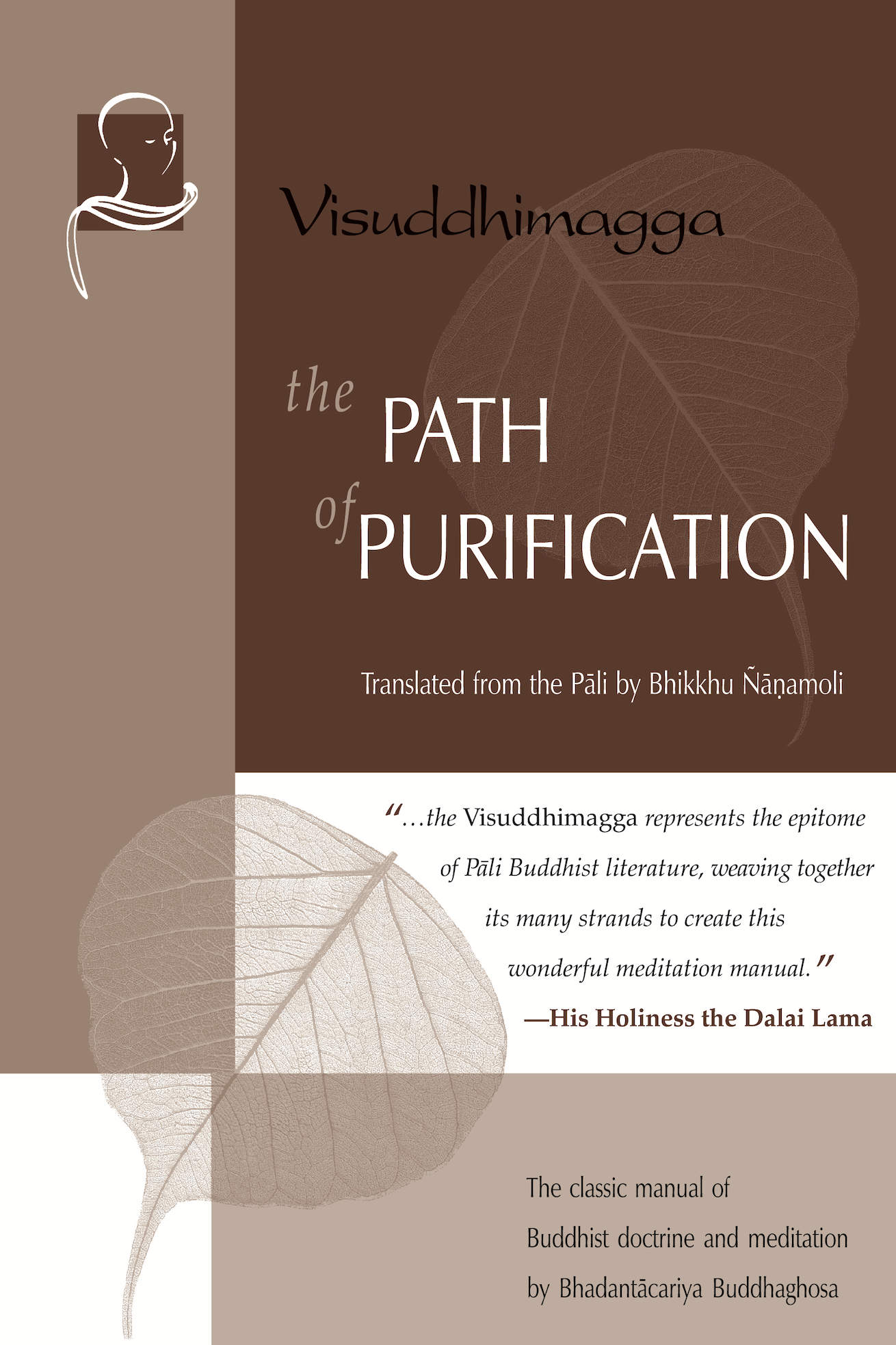
The Visuddhimagga is the "great treatise" of Theravada Buddhism, an encyclopedic manual of doctrine and meditation written in the fifth century A.D. by the great Buddhist commentator, Bhadantacaryia Buddhaghosa.
The most esteemed commentary in all of Pali literature, The Path of Purification, or Visuddhimagga, is a systematic examination and condensation of Buddhist doctrine and meditation technique. The various teachings of the Buddha, found throughout the Pali Canon, are organized in a clear, comprehensive manner. In the course of his treatise Buddhaghosa gives full and detailed instructions on the forty subjects of meditation aimed at concentration, an elaborate account of the Buddhist Abhidhamma philosophy, and explicit descriptions of the stages of insight culminating in final liberation.
The author, the India-born monk-scholar Bhadantacaryia Buddhaghosa, traveled to Sri Lanka to translate into Pāli the extensive Sinhalese commentaries preserved there. His crystallization of the entire Pāli Canon reinvigorated Theravad Buddhism in India and Sri Lanka. It still shines as clearly today, in this brilliant 1956 translation by the British-born monk, Bhikkhu Nanamoli, that in itself is considered an outstanding achievement of Pāli scholarship of the twentieth century.
View excerpts from the book.
This book is from BPS Pariyatti Editions, which republishes classic and contemporary titles from the Buddhist Publication Society.
The Visuddhimagga is available in Pāli from the Pali Text Society and also in translation from PTS, entitled The Path of Purity.
VIPASSANA PRODUCTS
Vipassana, which means to see things as they really are, is one of India's most ancient techniques of meditation. More information about Vipassana as taught by S.N. Goenka is available at www.dhamma.org.
The tag Vipassana identifies products that are directly related to this tradition and differentiates them from other Theravada resources available on our site. While the main emphasis in Vipassana meditation as taught by S.N. Goenka is on actual practice, this product may provide inspiration and guidance to a Vipassana meditator.
We also carry titles from the Theravada tradition, as we feel that by exploring the wider world of the Theravada texts, which include the Buddha’s discourses, commentaries, and scholarly articles and treatises, meditators have an opportunity to deepen their understanding of the Dhamma and thereby enrich their meditation practice. This kind of intellectual exploration also helps a meditator to gain an understanding of the evolution and historical context of their meditation tradition. This understanding in turn deepens their practice and understanding of the Dhamma.
Disclosure: Pariyatti is a participant in the Amazon Services LLC Associates Program, an affiliate advertising program designed to provide a means for sites to earn advertising fees by advertising and linking to Amazon.com.
Q: Why have you decided to partner with Amazon for the printing and distribution of your books?
A: Pariyatti is a non-profit organization whose purpose is to help disseminate the words of the Buddha.
The generosity of our customers and donors (donations make up ~25% of our revenue) is what has allowed Pariyatti to cover our annual shortfall, and permitted us to continue operations. We strive to continue to find ways to make best use of this hard-earned money, generously donated by so many to Pariyatti. One of these is to explore ways to optimize our operations.
Our goal is to disseminate Dhamma content. The choice of working with a given distribution partner is solely based on whether they can provide you, our customer (no matter where you live) with the item(s) you ordered in an accurate, timely, and reliable manner.
With the advent of eBooks and the internet, the entire book publishing and distribution industry has faced significant challenges. With these industry changes, and Pariyatti's additional challenges in serving a niche market with low sales volumes, it has been financially difficult to staff our own warehouse and operations. Year after year, the costs of maintaining our own warehouse has far exceeded the income.
By focusing on what we do best (such as make Dhamma content available at low or no cost), and partnering with others who have already built robust printing, packing, and delivery systems, we free up resources that can be redirected towards expanding Pariyatti's offerings for you.
We are always on the lookout for creative ways to make Dhamma content as widely and freely available as possible. If you have any ideas along these lines, please feel free to be in touch via director@pariyatti.org .